Student sanskar & personality development
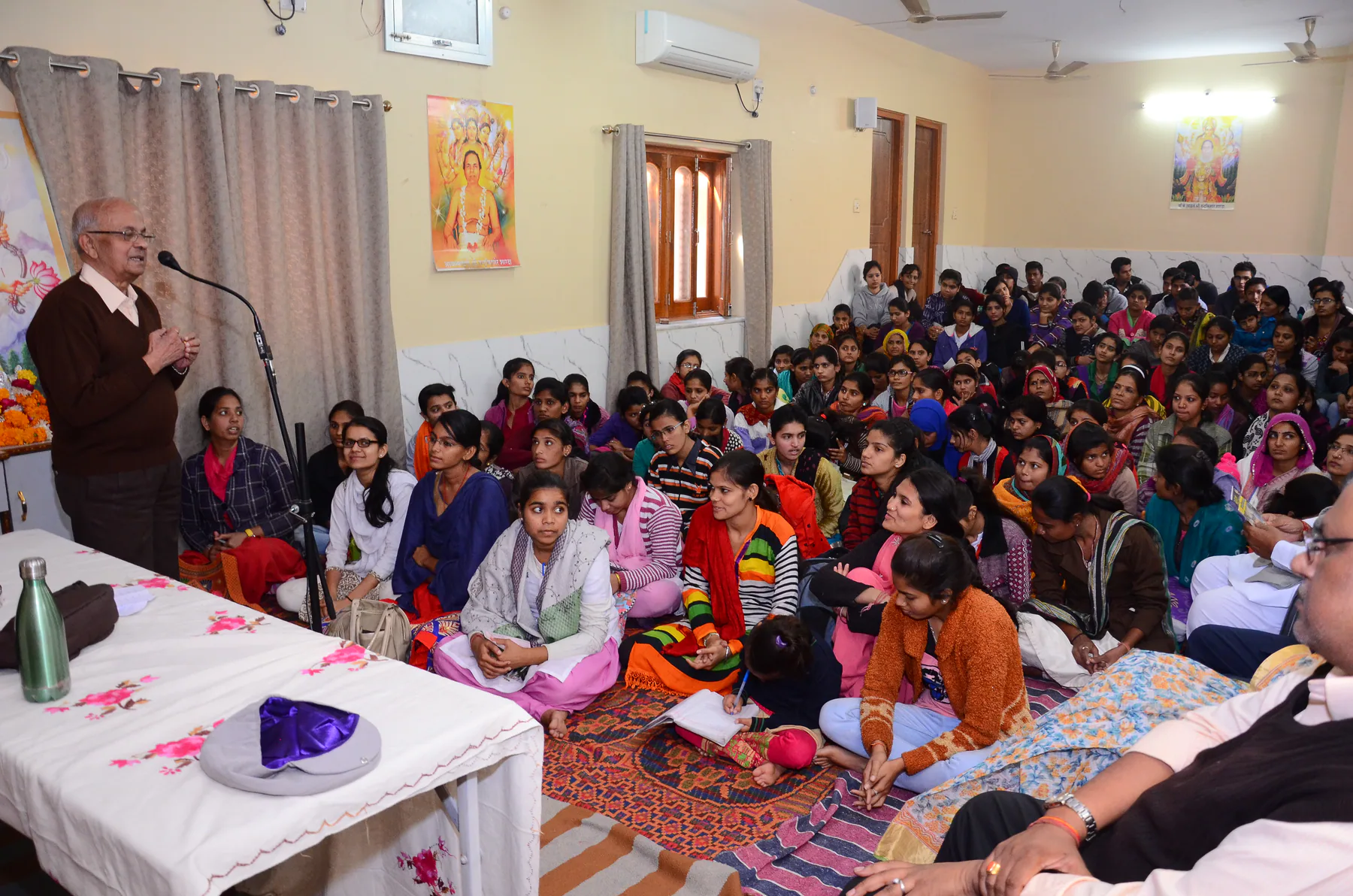
Sunday classes at Manidweep for students, where education is never confined to studies alone, but joins life with discernment, self-confidence, discipline, sensitivity and spiritual awareness.
From knowledge to a vision for life
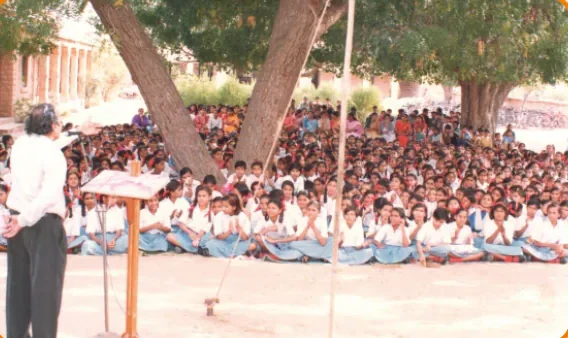
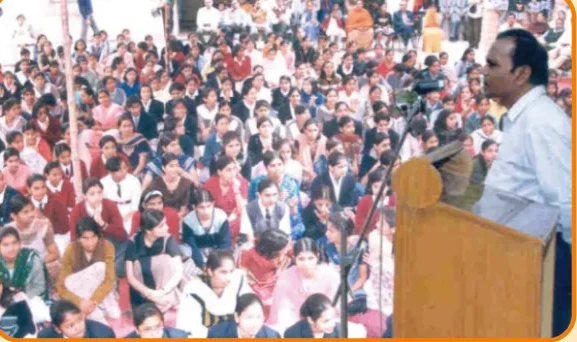
Years ago, Bhaiyaji himself would visit schools to explain to girl students the importance of education and sanskar — these Sunday classes are rooted in that same tradition.
-
Belief
Maa Basanti Ji Manihar and Bhaiya Shri Nandkishore Ji Sharda held a firm belief that education is complete only when it is joined with sanskar, spirituality and the development of human values. Knowledge alone does not make a person whole — love, compassion, discipline, positive thinking and social responsibility are equally necessary.
-
Form
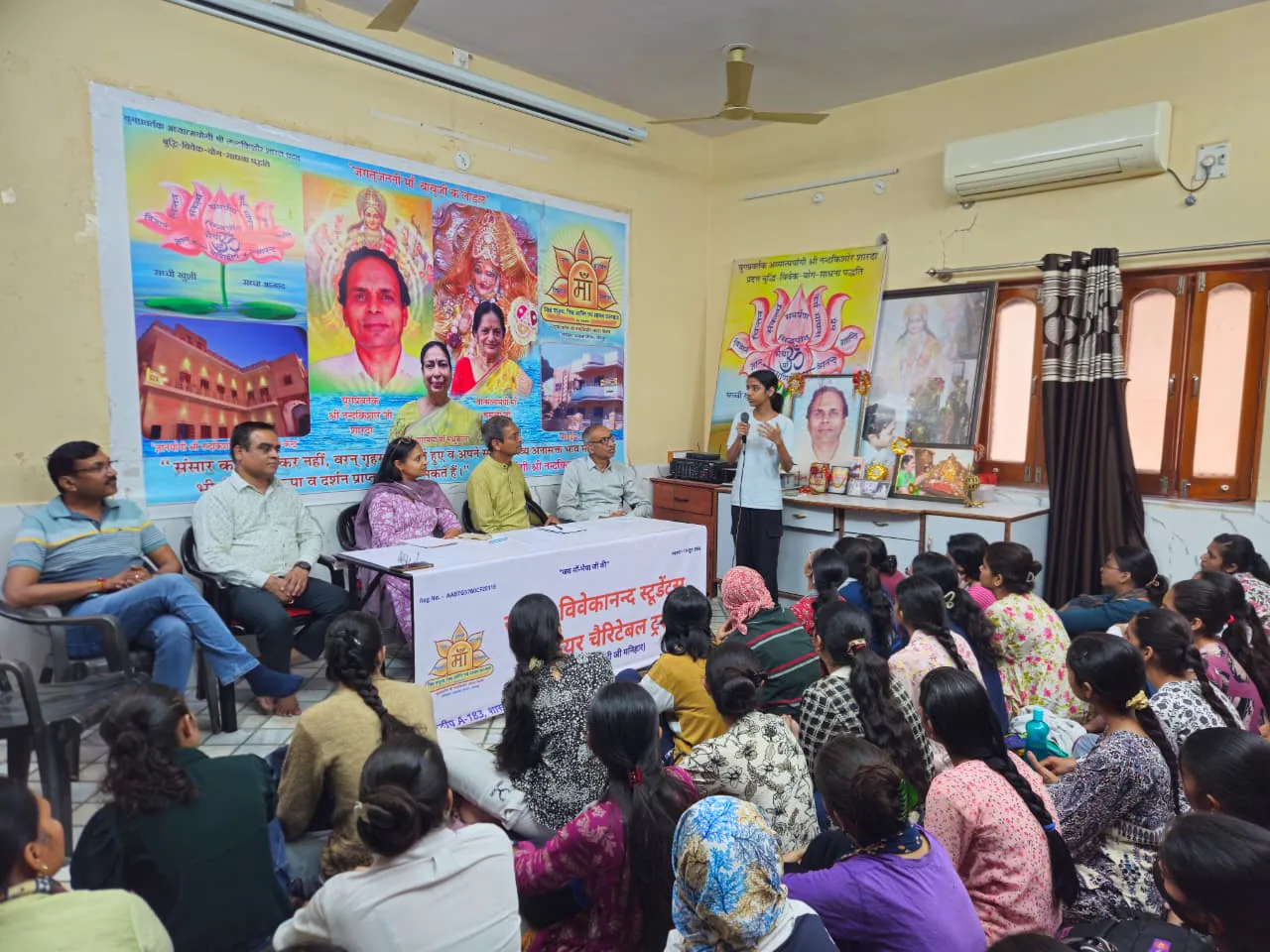
Putting this idea into practice, Maa Basanti Ji began sanskar and personality-development classes for students every Sunday, 11 AM to 1 PM, at Manidweep — where, alongside education, guidance is given on life values, spiritual reflection and one's rights and duties.
-
Today
Even after Maa Basanti Ji passed into her eternal form in 2021, this stream continues unbroken. Today, under Madhu Maa's guidance — with Madhu Maa herself and members of the Manidweep Adhyatm Parivar conducting these classes from time to time — they carry forward the very purpose Bhaiyaji and Maa Basanti Ji gave them.
In this same spirit, three core qualities are developed within students in these classes
Developing humility, discipline, gratitude and gracious behaviour.
Right thinking, self-reflection and the capacity to decide.
A mindful outlook towards family, society, nature and nation.
Sanskar alongside education, discernment alongside knowledge, and responsibility towards society alongside personal growth.
Small practices, deep transformation in life
Every topic is tied to students' daily lives. They are therefore organised into four simple streams, so students first connect from within, then carry the learning into discernment, behaviour and lifestyle.
Spiritual foundation and self-awakening
The foundation of inner strength and a positive outlook on life.
The importance of human life
Human life is priceless. A human being is God's finest creation, and the earth is their field of action. Making right use of discernment and continuous self-improvement are essential to giving life meaning.
Two daily practices are taught for this — first, at least 15 minutes each day of devoted, selfless remembrance and meditation on one's chosen deity, developing self-confidence, peace and positive energy; second, five minutes of self-reflection before sleep, to recognise and improve one's shortcomings and move towards solving problems.
The place of spirituality in human life
According to Bhaiyaji's knowledge, there is an unseen power in the universe that keeps creation in continuous motion. Alongside the physical aspect of human life, there is also a conscious aspect.
A person should, while honouring their parents, also try to understand and connect with the spiritual aspect of their life. This develops inner strength, inspires a person towards right action, and makes life more joyful.
Faith and love for God / one's chosen deity
"Selfless remembrance of and love for God is the very foundation of human life." This core sentiment was gradually developed as sanskar in the lives of the students.
This strengthened positive thinking and self-confidence, and developed a tendency to worship God / one's chosen deity in a selfless spirit. Alongside this, a decrease in selfishness and other faults, and a positive change in outlook on life, were observed.
Education, discernment and dedication to one's goal
Inquiry, reflection, time-discipline and mindfulness of one's goal.
The importance of education
Education is the foundation of a person's whole development. Its purpose is not merely to earn a certificate, but to develop knowledge, reflection, inquiry, self-confidence and the capacity to face challenges. Education joined with sanskar makes a person a valuable asset to society and nation.
Special attention is given to developing in students an interest in knowledge, a spirit of inquiry, and eagerness to learn. They are encouraged to ask questions, engage with teachers, and seek out answers to their own inquiries.
From intellect to wisdom
God has given everyone intellect, but its development and use differ from person to person. Continuous use of the intellect, reflection, inquiry, reasoning and practice sharpen it further.
So having intellect alone is not enough; it must be developed in the right direction to become wisdom.
Awareness of one's goal
Students are continually encouraged to recognise their inherent talent and to keep refining it. Understanding one's work and abilities with fairness and awareness, and using necessary knowledge with discernment while staying focused on one's goal, is an important step towards success.
The importance of time
According to Bhaiyaji, time is God's priceless gift, given equally to all. Success comes to those who understand the value of time and learn to make good use of every moment.
Circumstances keep changing; so in adverse times one should maintain patience, enthusiasm and courage, and keep trying. No difficulty is permanent, and continued effort always finds a path to a solution. Time is priceless — not even a single passed moment ever returns.
Character, relationships and social sensitivity
Conduct, speech, gratitude and balanced relationships.
The lesson of good manners
Humility, virtuous conduct, sweet speech and restraint are the foundations of good manners. One should hold respect, gratitude and love for parents, elders, teachers, nature and all living beings. Affection and guidance towards younger ones, and gracious conduct with everyone, lend dignity to life.
Restrained speech and conduct are also essential. Thinking before speaking, keeping anger in check, and keeping one's speech sweet and measured, all matter. Restraint develops peace, contentment and self-control in a person, and makes life more pleasant and balanced.
The importance of gratitude
A spirit of gratitude in life develops humility, generosity and sensitivity. Acknowledging others' cooperation, guidance and blessings behind one's own success, and selflessly helping those in need, increases inner contentment and positivity.
Gratitude towards nature, too, is essential. A healthy body, intellect, discernment, speech, and priceless gifts such as air, water and light all come to us from nature. Understanding their value, we should hold nature in respect, use its resources with discernment and restraint, and stay mindful of protecting the environment.
The importance of family
Respect towards elders and affection and guidance towards younger ones strengthen a family. A healthy exchange of ideas, mutual dialogue and cooperation within the family are essential.
Differences may arise, but they should never turn into ill will or bitterness. Warmth among family members and a spirit of mutual help are the foundation of a happy life.
"Whether or not you make a friend, make no one an enemy"
For a happy and peaceful life, it is essential to avoid negative thinking and negative environments as far as possible, and to maintain composure in every circumstance. Rather than reacting instantly when hurt by someone, one should stay calm and express oneself in measured language.
If someone troubles you out of self-interest, envy, malice or ego, keep necessary distance with caution, but do not let your mind be disturbed — keep your thought, speech and conduct balanced. The essence of this positive outlook is — "whether or not you make a friend, make no one an enemy."
Culture, labour and a balanced lifestyle
Cultural awareness, the dignity of labour, and the practice of health.
Cultural heritage
In these classes, students are introduced to the distinctive qualities of Indian culture and to inspiring episodes from the lives of great figures. This has developed in them qualities such as self-respect, courage, love for their country, and the capacity to face injustice.
Housework, too, is a form of yoga
With the absence of sanskar and spirituality from education, the dignity of labour is declining, and household work is often seen as lesser. Students are encouraged to take part happily even in the small chores of the home. This builds respect for labour, self-reliance, family closeness and warmth.
Among the families of girls given sanskar at Manidweep, such efforts are fostering a positive atmosphere, where mutual cooperation and affection are growing. Taking part in household work brings physical activity along with mental and emotional contentment; in this sense, it too is a form of yoga.
Knowledge related to health
A healthy body is an important foundation for success in life. Students are encouraged to make good use of nature's priceless gifts, and to make remembrance of one's chosen deity, meditation, pranayama and exercise a regular part of life.
A healthy body allows the mind, intellect and discernment to develop more effectively.
Confidence awakened in students
Through the sustained guidance of these classes, a positive change has been seen in how students think, learn and behave. Their interest and curiosity towards education have grown, along with a tendency to ask questions, reflect, and seek solutions to problems.
Alongside this, there has also been growth in academic achievement, self-confidence, discipline, time-management, active engagement and dedication to one's goal. Through continuous practice, qualities such as positive thinking, self-reliance, humility, restraint, human sensitivity and social responsibility are also developing in them.
In this way, the purpose of these classes is not merely to impart knowledge, but to join education to life and bring about a lasting, positive change in students' outlook and personality.
Experiences, in their own voice
Students, volunteers and guests connected with the classes share their own experiences, in their own words.
Sanskar-rooted direction for future generations
Inspired by love, compassion, harmony and service, this guidance has for years given students and young people direction towards a meaningful life. Through the coming together of education, sanskar and spiritual awareness, self-confidence, self-reliance, human values and social responsibility are being developed.